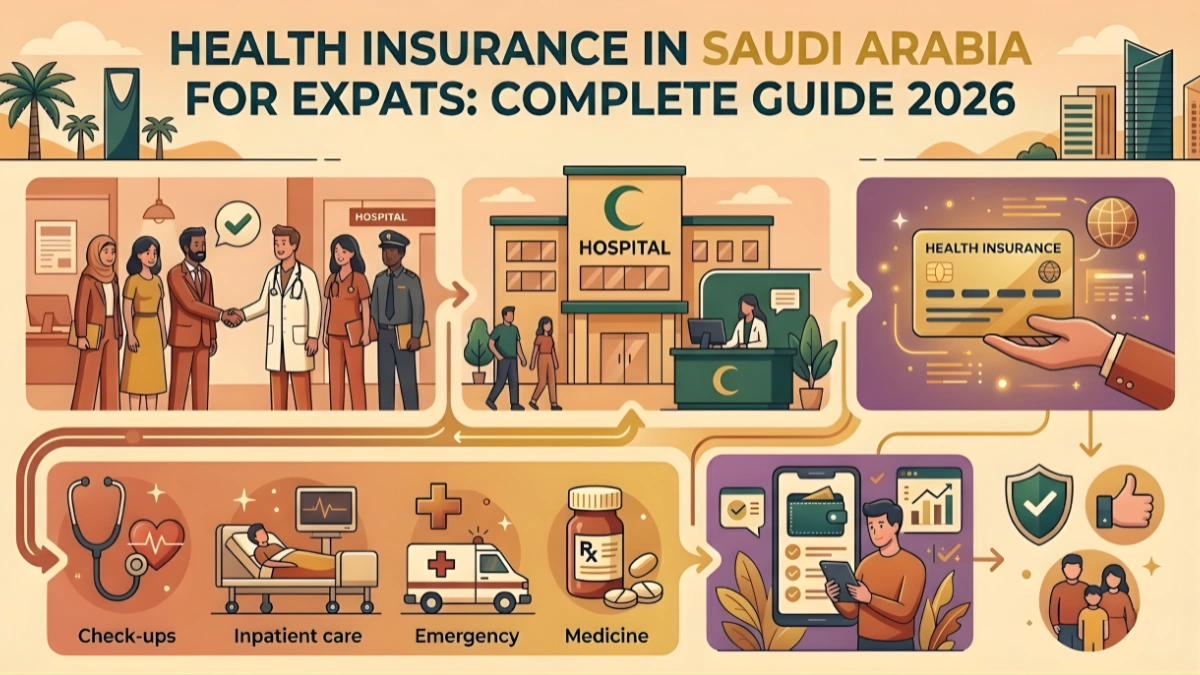
Health insurance is mandatory for expats living and working in Saudi Arabia because valid medical coverage is linked to residency, work permits, and access to private healthcare. In Riyadh, Jeddah, and Dammam, most expats receive basic insurance through their employer, since Saudi regulations require private-sector employers to provide approved medical coverage for foreign employees and their dependents under the supervision of the Council of Health Insurance. Recent visa rules also require health insurance before some temporary work visas are issued.
Why Health Insurance Is Mandatory for Expats
Saudi law requires active health insurance for legal residency and healthcare access.
- Required for Iqama issuance and renewal
- Mandatory for private-sector employees
- Needed for dependents under residency sponsorship
- Required for many visa categories
Without valid insurance, residency processing may be delayed.
Who Usually Pays for Expat Health Insurance
In most cases, the employer arranges the basic insurance policy.
- Employer covers employee insurance
- Dependents may be included depending on employer policy
- Domestic workers require sponsor-provided insurance
- Freelancers often buy private plans themselves
Coverage level depends on employer category and insurer network.
What Basic Expat Health Insurance Covers
Standard approved plans usually include essential healthcare services.
- Doctor consultations
- Emergency treatment
- Hospital admission
- Basic laboratory tests
Basic plans may still include co-payments for some services.
What Premium Plans Offer
Many expats upgrade to stronger private coverage for wider access.
- Premium private hospitals
- Specialist consultations
- Maternity coverage
- Wider medicine benefits
Premium plans are often preferred by families.
Top Health Insurance Companies for Expats
Several insurers are widely used by expats in Saudi Arabia.
- Bupa Arabia
- Tawuniya
- MEDGULF
- Al Rajhi Takaful
These companies differ by hospital network and premium level.
How Expats Check Their Insurance Status
Insurance validity can be checked digitally.
- Insurance card details
- Employer HR system
- Insurer mobile app
- Council of Health Insurance portal
Keeping active policy status is important before treatment.
Best Choice for Families
Family coverage should focus on provider network and dependents.
- Wide maternity hospital access
- Pediatric care coverage
- Emergency hospital network
- Annual limit review
Family plans usually cost more than individual plans.
Why Many Expats Buy Extra Private Coverage
Employer insurance may not cover everything.
- Limited specialist access
- Restricted hospitals
- Higher co-payments
- Limited annual benefits
Additional coverage improves treatment flexibility.
Health Insurance and Long-Term Residency
Continuous coverage helps avoid residency issues.
- Smooth Iqama renewal
- Easier dependent sponsorship
- Faster visa compliance
- Better medical access
Active insurance remains essential for long-term expat life.
Conclusion: Health insurance for expats in Saudi Arabia should focus on legal compliance, hospital network quality, and practical long-term medical access. Employer-provided insurance remains the starting point, but many expats choose stronger private plans for better coverage. Comparing insurers carefully helps secure reliable healthcare and smoother residency management.
Disclaimer: This article is for general informational purposes only. Insurance benefits, provider networks, annual limits, and eligibility may vary depending on insurer policy, visa type, employer category, and medical condition. Readers should verify current coverage details directly with licensed insurance providers before purchasing or renewing health insurance.